
“When even one American—who has done nothing wrong—is forced by fear
to shut his mind and close his mouth, than all Americans are in peril.”
— President Harry Truman, 1951
Chapter 10: The Lobby
The lobbying begins for those even at a young age in the US of I. Check your son or daughter’s history or current affairs textbooks. For example, World History, written by Stanley M. Burstein and Richard Shek and published by Holt, Rinehart, and Winston in 2006 includes a twenty-five-page chapter called “The Hebrews and Judaism.” Pages 208 to 213 are dedicated to Jewish beliefs and texts. Here is a sample of a few of the “history” nuggets being passed along:
Also central to the Jews’ religion are the ideas of justice and righteousness. To Jews, justice means kindness and fairness in dealing with other people. Everyone deserves justice, even strangers and criminals. Jews are expected to give aid to those who need it, including the poor, the sick, and orphans. Jews are also expected to be fair in business dealings. Righteousness refers to doing what is proper. Jews are supposed to behave properly, even if others around them do not. For the Jews, righteous behavior is more important than formal ceremonies (page 209).
[ebq]
These are unquestionably admirable qualities being professed to the American public of third graders, but does this sound like the Israel we know?
Information that surely got a thumbs up from the Jews that made up 25 percent of the academic reviewers of the book, and met the standards of one of the five consultants who oversaw content, Rabbi Gary M. Bretton-Granatoor (religion consultant), Director of Interfaith Affairs, Anti-Defamation League, New York. Surely he approved of the section “The Hebrew Bible” on page 211:
Also in the final part of the Hebrew Bible are the Proverbs, short expressions of Hebrew wisdom. Many of these sayings are attributed to Hebrew leaders, especially King Solomon. For example, Solomon is supposed to have said, “A good name is to be chosen rather than great riches.” In other words, it is better to be seen as a good person than to be rich and not respected.
The other major world religions were described in a historical development context, with no reference whatsoever to their professed attributes.
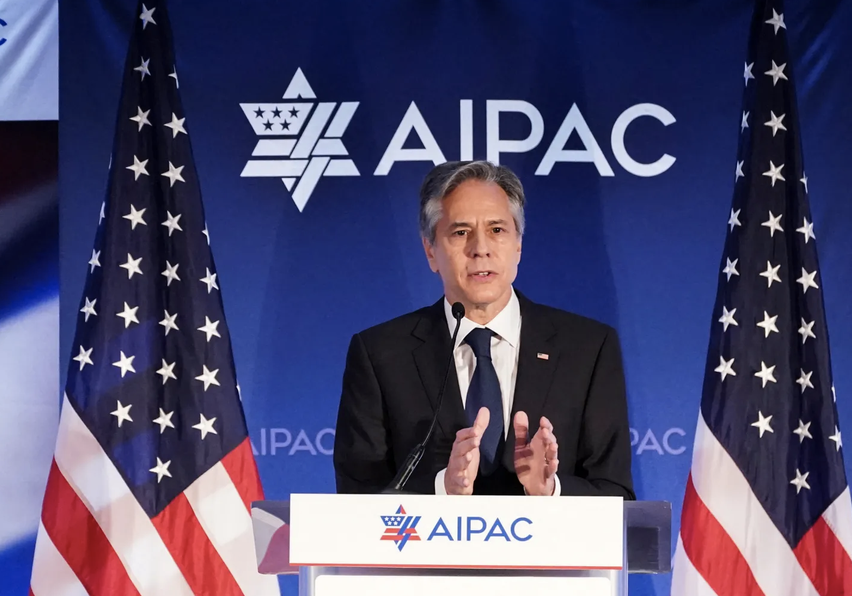
“The Lobby” in general is what John Mearsheimer (University of Chicago) and Stephen Walt (Harvard) called “a loose coalition of individuals and groups that seeks to influence American foreign policy in ways that will benefit Israel.” The state-of-mind that is the pro-Israel public relations effort itself could also be referred to as “the lobby.” And when referring to a single entity, it is usually the American Israel Public Affairs Committee (AIPAC) that earns “the lobby” nickname. In fact, on the landing page of its website as of October 4, 2020, a banner across the middle of the page declares “America’s Pro-Israel Lobby.”
When Mearsheimer and Walt released their academic paper that evolved into their book, The Israel Lobby, those very lobbyists attacked them hard and often. In the story “Report on Effect of Israel Lobby Distorts History, Critics Say” by Michael Powell in the Washington Post on April 3, 2006, we are introduced to the scholars’ arguments:
“No lobby has managed to divert US foreign policy as far from what the American national interest would otherwise suggest, while simultaneously convincing Americans that US and Israeli interests are essentially the same,” the authors wrote in a paper posted on the website of Harvard’s John F. Kennedy School of Government. “The United States has a terrorism problem in good part,” they add a few pages later, “because it is so closely allied with Israel, not the other way around.”
The main reasons given by the Saudi Arabian terrorists for executing the 9/11 attacks were the US’s support of Israel and the ongoing occupation and oppression of the Palestinians.
Yet the lobby prevails more often than not.
Details of the lobby’s influence are highlighted throughout this book; this chapter in particular is more of a potpourri of its effects. Regardless of its techniques, the lobby’s impact is startling, sometimes mind boggling.
On March 18, 2007 in the New York Times, Nicholas D. Kristof, in his column “Talking about Israel,” editorialized:
Democrats are railing at just about everything President Bush does, with one prominent exception: Mr. Bush’s crushing embrace of Israel. There is no serious political debate among either Democrats or Republicans about our policy toward Israelis and Palestinians. And that silence harms America, Middle East peace prospects and Israel itself. Within Israel, you hear vitriolic [bitter] debates in politics and the news media about the use of force and the occupation of Palestinian territories. Yet no major American candidate is willing today to be half as critical of hardline Israeli government policies as, say, Haaretz, the Israeli newspaper.
Obviously very few Americans read Haaretz. Any news from that region that reaches US shores is censored, filtered, or modified:
One reason for the void is that American politicians have learned to muzzle themselves. In the run-up to the 2004 primaries, Howard Dean said he favored an “even-handed role” for the US—and was blasted for being hostile to Israel. Likewise, Barack Obama has been scolded for daring to say: “Nobody is suffering more than the Palestinian people.”
During the 2020 Democratic Presidential primaries, Massachusetts senator Elizabeth Warren took command of the polls. On October 15, 2019, the Washington Post opined “that’s 7 percent ahead of Sanders and 10 percent ahead of Biden.” She was vibrant, articulate, and focused on spelling out policy.
A few days after the Post ran the numbers, in a Newsweek article by James Walker that ran on October 19, when Warren responded to a question about Israel building settlements on Palestinian land, she said, “It is the official policy of the United States of America to support a two-state solution, and if Israel is moving in the opposite direction, then everything is on the table.” Meaning yes, she would consider cutting off America’s generous annual aid to Israel if the settlement building didn’t stop.
Jewish billionaire Mike Bloomberg must not have liked what he heard. After deciding not to run at all unless Joe Biden dropped out, Bloomberg suddenly entered the race in early November, officially filing later in the month. He’d go on to spend approximately $500 million on his campaign before dropping out in March, having failed miserably in the primaries.
About the time Bloomberg signed up, Warren suddenly found that the polls were signaling a fall. By the middle of November she had fallen to third. By January she was a non-factor and in March she dropped out. She was in fourth place among Democrats in Iowa and New Hampshire, and her support in the latter state had dropped by 50 percent.
She had also waffled on Trump’s order to eradicate Iranian military leader Qasem Soleimani in early January. She first backed the move and agreed Soleimani was a murderer responsible for thousands of deaths, but later recanted by saying that Soleimani was a “senior government official” who had been assassinated. She suggested Trump only did it because he was facing impeachment at the time. Probably true, but Warren’s position was not a popular one among the powers that be, especially since Soleimani’s demise made the Israeli regime very happy.
In the same article that suggested that Warren was keeping an open mind about cutting aid to Israel, James Walker also wrote about Israeli sanctions against two Congresswomen, Ilhan Omar and Rashida Tlaib, who were blocked from entering Israel because they supported the Boycott, Divestment and Sanctions movement, which criticized Israel over its treatment of Palestinians.
The US’s “ally”—the alleged lone stalwart democracy in the Middle East—banned two representatives of the American government from visiting Israel and Palestine. So much for open dialogue or allowing differing viewpoints in what’s supposed to be a free and open state.
(Remember what the textbook said? “To Jews, justice means kindness and fairness in dealing with other people.”)
Meanwhile, over the decades, AIPAC has essentially been a policy and personnel decision maker.
On March 12, 2009, Mark Mazzetti and Helene Cooper wrote in the New York Times about the lobby’s influence in US state affairs under “Israel Stance Was Undoing of Nominee for Intelligence Post.” Charles Freeman, a former ambassador to Saudi Arabia under the first President Bush was named to a top intelligence post by Dennis C. Blair, the director of national intelligence, in spite of the controversy around the appointment.
Correct—the lobby didn’t like it.
It was an American naming an American to a post, but it had to be cleared by AIPAC first. That wasn’t going to happen. Freeman had consistently criticized Israel over the years, including the week of his announcement. He said, “Israel is driving itself toward a cliff, and it is irresponsible not to question Israeli policy and to decide what is best for the American people.”
Mazetti and Cooper wrote:
“The reality of Washington is that our political landscape finds it difficult to assimilate any criticism of any segment of Israeli leadership,” said Robert W. Jordan, who was ambassador to Saudi Arabia from 2001 to 2003. The lobbying campaign against Mr. Freeman included telephone calls to the White House from prominent lawmakers, including Senator Charles E. Schumer, the New York democrat. It appears to have been kicked off three weeks ago in a blog post by Steven J. Rosen, a former top official of the American Israel Public Affairs Committee, a pro-Israel lobbying group.
Schumer is Jewish, a devoted friend to Israeli leader Benjamin Netanyahu, and presently the leading Democrat in the US Senate.
On June 8, 2013, a story in the New York Times was called “Choice for UN Post Gets Israeli Vote of Confidence” by Mark Landler:
Samantha Power, President Obama’s choice to be the next ambassador to the United Nations, is encountering resistance from pro-Israel groups for remarks she once made about Israel and the Palestinians. But on Friday she got an unexpected vote of confidence from Israel’s representative in the United States. Michael B. Oren, the Israeli ambassador to Washington, said in an interview that Ms. Power, a journalist and academic who has written and spoken widely about human rights abuses, had a deep understanding of Israel’s security issues and sympathy of its concerns.
Whew. Thumbs up from the United States of Israel. In the same story, we were reminded of similar recent events:
Chuck Hagel, Mr. Obama’s choice for defense secretary, was also accused of being anti-Israel. He defended his record and won a relatively narrow Senate confirmation vote.
During the Hagel deliberations, Nicholas D. Kristof wrote a column on January 10, 2013 in which he pointed out that claims of anti-Semitism are ludicrous and devalue the term. He titled his column “In Defense of Hagel for Defense”:
It’s bullying and name-calling to denounce people as anti-Semitic because they won’t embrace the policies of a far-right Israel government that regularly shoots itself in the foot. In a world in which anti-Semitism actually does persist, this is devaluing the term so that it becomes simply a glib right-wing insult. Maybe that’s why Jewish Voice for Peace, a liberal American Jewish organization, has announced that its supporters have sent 10,000 e-mails to President Obama in support of Hagel’s nomination.
Why was the former US senator in trouble with the US of I.? Michael Abramowitz explained in the Washington Post on July 29, 2006 in the story “Hagel Decries US ‘Crisis Diplomacy’ in Mideast”:
Sen. Chuck Hagel (R-Neb.) offered a sharp critique of US Mideast policy yesterday, saying the United States must engage Syria and Iran and warning that a close alliance with Israel must not come at the expense of relations with the Arab and Muslim world. Hagel, an iconoclastic [non-traditional viewpoints] Republican who has been considering a presidential bid in 2008, said lasting peace in the Middle East and security for Israel will come only from a regional settlement of the Israeli-Palestinian dispute, a process he suggested has been neglected by the United States in recent years.
Hagel believed in diplomacy over force; he and his brother were both wounded fighting in Vietnam. Hagel would serve as Secretary of Defense from 2013 to 2015, a Republican chosen by a Democrat president.
On April 5, 2007, David S. Cloud and Helene Cooper wrote a story in the New York Times titled “Israel’s Protests Are Said to Stall Gulf Arms Sale”:
A major arms-sale package that the Bush administration is planning to offer Saudi Arabia and other Persian Gulf allies to deter Iran has been delayed because of objections from Israel, which says that the advanced weaponry would erode its military advantage over its regional rivals, according to senior United States officials.
From head-scratching news under Bush to absolutely mind-boggling under Trump. In Haaretz on October 10, 2020, Ron Kampeas wrote under the headline “Bipartisan Bill Would Give Israel a Veto on Middle East Arms Sales”:
The bill “would require the President to consult with the Israeli government to ensure qualitative military edge (QME) concerns are settled” when it comes to arms sales to Middle Eastern countries, said the news release Friday announcing its introduction the previous day. The release came from the office of the bill’s lead sponsor, Rep. Brad Schneider, D-Ill. Most of the sponsors are Democrats, including a number of Jewish lawmakers, among them Schneider, Elaine Luria of Virginia, Max Rose of New York, Josh Gottheimer of New Jersey, and Ted Deutch and Debbie Wasserman Schultz of Florida. AIPAC, the prominent Israel lobby, supports the new measure.
Interesting to see if and who puts up an argument. They would have to be careful.
President Obama was much tougher with Israel, of course to a limit, but he did garner praise on at least one occasion. Feel free to read between the lines of this remarkable story in Haaretz from September 11, 2008. The column “US Jews Laud Obama Pick of Rahm Emanuel for Chief of Staff” was written by Natasha Mozgovaya and Anshel Pfeffer:
Choosing Rep. Emanuel is a sign that President-elect Obama is learning from the mistakes of the two most recent Democratic Presidents, who brought in Washington outsiders to run the White House, and did so at their own peril—often finding themselves in battles with the Washington Democratic establishment. Emanuel’s selection will avoid such “freshman mistakes,” the UJC [United Jewish Communities] official continued. “Rep. Emanuel is also a good friend of Israel, coming from good Irgun stock, davening [reciting prayers] at an Orthodox synagogue, and sending his children to Jewish day schools,” [William] Daroff concluded.
Irgun is in reference to a Zionist paramilitary organization that operated in Palestine in the 1930s and 1940s. They were terrorists (see chapter 2) who believed in taking all of the land for Jews. His father was a member. Their doctrine is being carried out today.
After working for Obama, Emanuel resigned in 2010 to run in Chicago’s mayoral election. He won in a runoff and handled the job from 2011 to 2019. Along the way, his approval rating plummeted, based on his overall treatment of race relations and one incident in particular. In “How Police Unions Fight Reform” in the August 3 and 10 editions of the New Yorker magazine, William Finnegan includes:
At times, the code of secrecy spreads to elected officials. In Chicago, in 2014, an officer shot a teen-age boy named Laquan McDonald sixteen times. The police report said that McDonald had advanced on officers with a raised knife. More than a year later, after an activist and a freelance journalist sued under the Freedom of Information Act, the city released a dash-cam video, which showed McDonald not advancing with a knife but walking away. This cover-up wasn’t perpetrated by the police alone. City leaders knew what was on the video. Mayor Rahm Emanuel, though he denied having watched it, fought for thirteen months to prevent its release.
Murder of a minority covered up. It’s what the two countries in the US of I most regularly have in common.
Having enjoyed seeing Iraq and Syria being destabilized and weakened, much of the lobbying in recent years has been about Iran. (See chapter 12.) Again, it’s the last piece of the puzzle for the Israeli regime. Not long after he took office, Prime Minister Benjamin Netanyahu began his ongoing campaign.
“Netanyahu Asks Pope to Condemn Iran” was published by the New York Times on May 1, 2009. The story by Rachel Donadio points out that the Vatican has full diplomatic ties with Iran:
A day after visiting a Palestinian refugee camp and calling for the creation of a Palestinian state as a solution to the ongoing conflict with Israel, Benedict met with Mr. Netanyahu, whose hawkish Likud government has not endorsed that policy. Mr. Netanyahu used the occasion to raise what has become a central issue to his government. “I asked him as a moral figure to make his voice heard loudly and continuously against the declarations coming from Iran about their intentions to destroy the state of Israel,” Mr. Netanyahu told Israeli television after meeting Benedict. (In the past, Iran’s president, Mahmoud Ahmadinejad, has called for Israel’s destruction, although on at least one occasion last year he used somewhat less severe language, saying Israel would collapse.)
Again, talk is cheap. Iran never had nor has any intention of destroying Israel, even as Israel destroys Palestine. It was a distraction. Netanyahu didn’t like hearing the Pope talk about the creation of a Palestinian state, so he sidestepped it and brought up Iran. As always, crying wolf, lying whenever necessary. The lobby is in full support.
Dana Milbank’s piece in the Washington Post on March 5, 2012 was called “AIPAC Beats the Drums of War”:
A barbershop quartet performed for participants in the American Israel Public Affairs Committee as they took the convention center escalators to Monday’s meeting of the pro-Israel lobby. But once inside the hall, the AIPAC attendees heard the sounds of war drums. “Iran’s nuclear program continues to march forward,” Prime Minister Benjamin Netanyahu told the crowd of thousands Monday night. “My friends, Israel has waited and waited for the international community to resolve this issue. We’ve waited for diplomacy to work. We’ve waited for sanctions to work. None of us can afford to wait much longer. As prime minister of Israel, I will never let my people live in the shadow of annihilation.”
Unfortunately for his regime, over the course of the last decade-and-a-half, there was plenty of sentiment and proof steering matters in the opposite direction. The Washington Post ran “Neighbors Join Call against Attack on Iran” on October 17, 2007 by Peter Finn:
Visiting Iran on Tuesday, Russian President Vladimir Putin reiterated his opposition to any military attack on the country in response to its controversial nuclear program. No Caspian Sea country should let its territory be used by other countries “for aggressive or military operations against another Caspian state,” said Putin, who is attending a meeting in Tehran of the leaders of the five countries that border the inland sea. The leaders jointly made a similar statement, signaling the opposition of Iran’s neighbors to any military action by the United States or its allies.
In other words, you probably don’t want to start World War III just to appease Israel. Good thing, because less than two months later there was this in the New York Times. December 7, 2007, “US Finds Iran Halted Its Nuclear Arms Effort in 2003,” by Mark Mazzetti:
A new assessment by American intelligence agencies released Monday concludes that Iran halted its nuclear weapons program in 2003 and that the program remains frozen, contradicting judgment two years ago that Tehran was working relentlessly toward building a nuclear bomb. The conclusions of the new assessment are likely to reshape the final year of the Bush administration, which has made halting Iran’s nuclear program a cornerstone of its foreign policy.
On January 12, 2008, Robin Wright and Ann Scotty Tyson wrote in the Washington Post under “Objects from Iranian Boats Posed No Threat, Navy Says”:
The small, boxlike objects dropped in the water by Iranian boats as they approached US warships in the Persian Gulf on Sunday posed no threat to the American vessels, US officials said yesterday, even as the chairman of the Joint Chiefs of Staff charged that the incident reflects Iran’s new tactics of asymmetric warfare.
Then on September 24, 2009, the Post ran “Iranian Leader Offers US Access to the Country’s Nuclear Scientists—Ahmadinejad Says Talks Could Build Trust over Issue.” Glenn Kessler was the writer:
“These nuclear materials we are seeking to purchase are for medicinal purposes … It is a humanitarian issue,” Ahmadinejad said in the interview. “I think this is a very solid proposal which gives a good opportunity for a start” to build trust between the two countries and “engage in cooperation.”
Happy news for everyone in the world, except for the Israeli regime.
Also unfortunate for them, some honesty and reality from within, as reported by Jodi Rudoren in the New York Times on April 26, 2012. “Army Chief in Israel Says Iran Regime Is ‘Rational’”:
The Israeli military chief described the Iranian government as “rational” in interviews published Wednesday and said he did not believe it would build a nuclear bomb, appearing to put some distance between himself and Prime Minister Benjamin Netanyahu and Defense Minister Ehud Barak.
Finally, the New York Times’ lead editorial on August 2, 2015 was entitled “Republican Hypocrisy on Iran”:
The exaggerations and half-truths that some Republicans are using to derail President Obama’s important and necessary nuclear deal with Iran are beyond ugly. Invoking the Holocaust, Mike Huckabee, a contender for the Republican presidential nomination, has accused Mr. Obama of marching Israelis “to the door of the oven.” Tom Cotton, a senator from Arkansas, has compared Secretary of State John Kerry, who helped negotiate the deal, to Pontius Pilate. What should be a thoughtful debate has been turned into a vicious battle against Mr. Obama, involving not just the Republicans but Israel’s prime minister, Benjamin Netanyahu. The unseemly spectacle of lawmakers siding with a foreign leader against their own commander in chief has widened an already dangerous breach between two old allies.
Netanyahu bakes the exaggerations and half-truths and the Republicans willfully serve them up. And while America listens to the lies and the hype, something else goes on endlessly behind the curtain in Israel. Pay no attention taxpayers. “Israeli Military Closes Probe,” by Howard Schneider in the Washington Post on March 31, 2009, is just another example of hundreds:
The Israeli military’s top lawyer on Monday closed an investigation into alleged misconduct by soldiers who took part in Israel’s recent three-week assault on the Gaza Strip, concluding that accusations made by graduates of a military preparatory school were “based on hearsay.” In a statement, the Israel Defense Forces said that Brig. Gen. Avichai Mendelblit, the IDF’s advocate general, found no evidence to support the most serious accusations, including alleged instances in which civilians were shot without cause. Israeli human rights groups including B’Tselem and Yesh Din said they still want a broad, independent investigation of the Gaza operation because they don’t trust the Israeli military to police itself.
Nothing we haven’t read before, but ignored in the US of I by the media and most politicians. This ownership of the collective mind is on display during campaign seasons in particular, as it was leading up the 2012 presidential election.
Thomas L. Friedman wrote beneath “Newt, Mitt, Bibi, and Vladimir” in the New York Times on December 13, 2011:
I have a simple motto when it comes to the Israeli-Palestinian conflict. I love both Israelis and Palestinians, but God save me from some of their American friends—those who want to love them to death, literally. That thought came to mind last week when Newt Gingrich took the Republican competition to grovel for Jewish votes—by out-loving Israel—to a new low by suggesting that the Palestinians are an “invented” people and not a real nation entitled to a state.
This was supposed to show that Newt loves Israel more than Mitt Romney, who only told the Israeli newspaper Israel Hayom that he would move the US embassy from Tel Aviv to Jerusalem because “I don’t seek to take actions independent of what our allies think is best, and if Israel’s leaders thought that a move of that nature would be helpful to their efforts, then that’s something I’d be inclined to do … I don’t think America should play the role of the leader of the peace process. Instead, we should stand by our ally.” That’s right. America’s role is to just applaud whatever Israel does, serve as its ATM and shut up. We have no interests of our own. And this guy’s running for president?
On August 6, 2012, Thomas B. Edsall wrote a piece called “Embracing Sheldon Adelson” about Romney in the New York Times. The wealthy Mormon candidate’s net worth was about $250 million at that time:
The presumptive Republican nominee refuses to release his pre-2010 tax returns, will not identify his major fundraisers and bundlers and wiped all computer records of staff emails clean at the end of his term as governor of Massachusetts in 2006. Romney’s rationale is that material like this could be used by the Obama campaign to discredit him.
Material like what?
So what was this ever-so-guarded, moralistic (“I want to clean up the moral pollution on TV and the Internet”) politician doing at a $50,000-a-couple fundraiser in Jerusalem with Sheldon G. Adelson—proprietor of one of the largest, if not the largest, gambling and casino operations in the world—seated in the honored position at his side? Adelson and his company are under investigation by the Securities and Exchange Commission and the Department of Justice on allegations of foreign bribery. In addition, the United States Attorney’s office in Los Angeles is investigating whether Adelson’s Las Vegas Sands Corporation failed to alert authorities to millions of dollars transferred to casinos in violation of money-laundering laws, the Wall Street Journal reported on August 4.
Four years later Adelson bought Trump. Referenced earlier, in the June 18, 2018 issue of the New Yorker, Adam Entous wrote an article called “The Enemy of My Enemy—How Donald Trump, Israel, and the Gulf States Plan to Fight Iran—and Leave the Palestinians and the Obama Years Behind”:
In May, 2016, after it became clear that Trump was going to win the nomination, Adelson endorsed him, but he informed the campaign that he wanted a commitment to move the US embassy from Tel Aviv to Jerusalem. For many years, Palestinian, Israeli, and American negotiators had discussed a Palestinian state that would have as its capital at least some part of East Jerusalem. Adelson wanted to take the issue of dividing the capital “off the table.” A Trump confidant said, “That was the sole issue for him. It was his dream.”
Dream come true, eventually. Adelson believed it would happen on Trump’s first day in office:
But after James Mattis and Rex Tillerson, his nominees for Defense Secretary and Secretary of State, urged caution, Trump decided to defer the move. The Trump confidant said that Adelson was caught off guard. As the weeks passed without an announcement, Adelson started to complain. “You’re making a fool out of me!” he shouted on the phone to a senior White House aide. Eventually, Adelson and others pressured Trump to stop delaying by warning him that he risked losing support among evangelical Christians.
Before another Jewish billionaire, Michael Bloomberg, blew a half-billion-dollars on his failed 2020 presidential campaign, in 2009 he set municipal records by spending $100 million or so on his election to a third term as New York City’s mayor. Until he pushed through a change, there had been a two-term limit for mayors there. Robin Shulman wrote in the Washington Post on November 2, 2009 that “The Mayor successfully pressed the City Council for an extension to three terms from two after voters twice rejected such a change in referendums.”
Yes, the city electorate twice voted no to giving him an extension, but he went ahead a got one anyway. The story was headlined “Despite Bloomberg’s Lead, New Yorkers Have Misgivings”:
“It’s a toxic combination of excessive spending and bypassing the public. I think they reinforce each other as a red flag about the state of New York’s democracy,” said Gene Russianoff, staff attorney for the New York Public Interest Research Group, who nonetheless said he recognizes the mayor’s achievements.
One of his achievements came three years earlier and had nothing to do with NYC. When former vice presidential candidate and staunchly pro-Israel Jewish senator from Connecticut, Joseph Lieberman, lost his democratic primary to hold on to office in 2006, Bloomberg came to his rescue. Lieberman would run and win as an independent. His pro-war, pro-invade-Iraq positions made Lieberman a Republican in a Democrat’s body, and very popular with the Israel lobby.
On October 28, 2006, the New York Times inked “Bloomberg Sends Troops to Help Lieberman” by Diane Cardwell:
In his battle for re-election to the United States Senate without the backing of the Democratic Party, Joseph I. Lieberman is deploying a secret weapon in the race’s closing days a sophisticated operation to identify and turn out voters, courtesy of Mayor Michael R. Bloomberg of New York City.
The Bloomberg group includes several top-level operatives who played key roles in the mayor’s decisive re-election last year or who are in the administration, and have taken leaves from their jobs to work on Mr. Lieberman’s campaign. Since Mr. Lieberman lost the Democratic primary in Connecticut to Ned Lamont, they have helped open campaign offices, devised a strategy to reach voters and are corralling enough volunteers to cover 2,800 shifts at more than 700 polling sites on Election Day, Nov. 7.
He was welcomed back with open arms, and in 2008, despite criticizing President Obama and supporting Republican candidate John McCain during the presidential campaign, he was able to hold on to his key committee positions. He remained the chairman of the Homeland Security and Governmental Affairs Committee and also head of an Armed Services subcommittee.
Money talks, while people critical of Israel, aren’t allowed to.